Packaging has come a long way from being a mere protective shell around a product. Today, it’s a reflection of your brand’s values, and for many customers, it’s the first sign that your business cares about the planet. In a world drowning in plastic, choosing eco-friendly packaging materials isn’t just trendy; it’s essential.

Whether you run a small craft store, a growing e-commerce brand, or a food delivery business, switching to sustainable packaging materials can make a world of difference. From biodegradable mailers to mushroom-grown boxes, let’s explore smart, stylish, and sustainable ways to package with purpose.

What makes packaging sustainable?

When you think sustainability, think of packaging that gives back more than it takes. 

Sustainable packaging isn’t about using something that looks earthy. It’s about reducing environmental impact through the entire lifecycle – sourcing, production, use, and disposal. 

True sustainable materials:

  • Come from renewables or recycled resources
  • Require minimal energy or water to produce
  • Can be reused, recycled, or composted easily
  • Leave behind no harmful residue

When you think sustainability, think of packaging that gives back more than it takes.

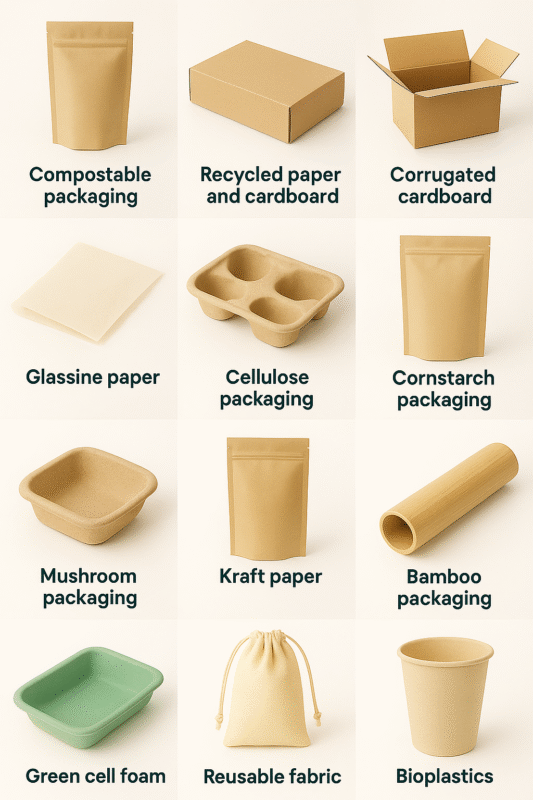
Compostable Packaging - Nature’s Recycling System.

Composite packaging is designed to decompose naturally into organic matter, returning nutrients to the soil. Made from plant-based materials such as cornstarch, bamboo, or sugarcane, it’s a favourite among eco-conscious brands.

Why it works:

  • Breaks down in home compost within six months
  • Leaves no toxins or microplastics behind
  • Perfect for food boxes, mailers, and takeaway containers

From restaurants to online boutiques, compostable mailers are fast replacing plastic polybags - proof that sustainability can be sleek too.

Recycled Paper and Cardboard - The Reliable Classics.

When it comes to eco-friendly packaging, recycled paper and cardboard have stood the test of time. They’re sturdy, cost-effective, and can be repurposed multiple times before losing quality.

The perks:

  • Reduces landfill waste and deforestation
  • Consumes less energy and water than virgin paper
  • Ideal for shipping boxes, wraps, and inserts

With creative printing and custom branding, recycled packaging no longer means dull or generic; it can look just as premium as any other material.

Corrugated Cardboard - Strong, Recyclable, and Reusable

The unsung hero of the e-commerce world, corrugated cardboard combines strength with sustainability. Its fluted design offers shock absorption, while its recyclability makes it an environmental favourite.

Fun fact: Corrugated boxes can be recycled up to seven times before the fibres wear out. That’s circular economy in action!

Perfect for shipping, storage, and even display packaging. It’s durable, cost-efficient, and endlessly adaptable.

Glassine Paper - Sleek, Smooth, and Biodegradable

If your brand values presentation as much as sustainability, glassine paper strikes that perfect balance. Made from polished wood pulp, it's semi-transparent, air-resistant, and biodegradable.

Common uses:

  • Wrapping candles, soaps, and stationery
  • Food-safe pouches for bakeries and cafes
  • Envelope windows and product sleeves

Unlike plastic, glassine doesn’t release toxins when decomposing - making it a safe and stylish choice

Cellulose Packaging - Plastic Look, Planet-Friendly Heart

Cellulose films are derived from renewable plant fibres like wood and hemp. They mimic the clarity and flexibility of plastic but are fully biodegradable.

Why brands love it:

  • Moisture-resistant, ideal for perishable products
  • Breaks down naturally without industrial composting
  • Offers a high-end, glossy finish

You’ll find cellulose wraps in food, skincare, and health-product packaging - a great example of innovation meeting aesthetics.

Cornstarch Packaging - Lightweight, Strong, and Biodegradable

Cornstarch-based materials are becoming a staple in the packaging industry. Extracted from corn kernels, they’re renewable, biodegradable, and safe for the environment.

They’re commonly used for:

  • Packing peanuts as an alternative to Styrofoam
  • Trays and cutlery for food delivery
  • Mailers for e-commerce shipping

And yes, they dissolve in water, leaving harmful traces - nature’s own version of ‘disappearing packaging.’

. Mushroom Packaging - The Fungi Revolution

Mushrooms aren’t just for gourmet meals anymore; they’re now protecting products too! Mushroom packaging is made from mycelium, the root network of fungi, combined with agricultural waste.

Why it’s brilliant:

  • Fully compostable and toxin-free
  • Custom-moulded to fit any product shape
  • Decomposes within 45 days

It’s a dream material for fragile products like cosmetics, electronics, or home décor - durable in transit, biodegradable at destination.

Kraft Paper - Simple, Strong, Sustainable

Kraft paper is the go-to for brands that want eco-conscious packaging without compromising on looks. Made through a chemical process that reuses nearly all production materials, it’s both efficient and ethical.

Uses include:

  • Wrapping, bags, and envelopes
  • Hang tags and labels
  • Printed mailers for a rustic aesthetic

Bonus: It’s available in multiple thicknesses, so you can choose lightweight options for small items or heavy-duty ones for bulkier goods.

Bamboo Packaging - The Fast-Growing Wonder

Bamboo might just be nature’s most renewable gift. It grows rapidly and doesn’t require replanting.

Bamboo fibers are being turned into boxes, wraps, and even molded containers that rival plastic in strength.

What makes bamboo amazing:

  • 100% biodegradable and compostable
  • Naturally antimicrobial, perfect for food packaging
  • Strong, durable, and heat-resistant

As consumers demand greener packaging, bamboo is quickly taking centre stage

Green Cell Foam - The Dissolving Protector

This innovative material behaves like traditional foam but is made from cornstarch and plant-based polymers. Once used, it can be dissolved in water or composted.

It’s especially useful for brands shipping delicate goods that need cushioning without plastic pollution.

Why it’s special:

  • Renewable source (grown corn)
  • Non-toxic and safe for home disposal
  • Lightweight yet durable

Say goodbye to plastic air pillows - this is foam with a conscience.

Reusable Fabric Packaging - Wrap It, Wash It, Reuse It

For brands that want to go the extra mile, fabric-based packaging offers long-term sustainability. Materials like organic cotton, hemp, or linen can be sewn into pouches or wraps that customers can reuse again and again.

Best for:

  • Apparel, jewellery, and lifestyle brands
  • Gift wrapping or subscription boxes
  • Refillable product systems

Fabric packaging transforms waste into a lifestyle statement, blending sustainability with reusability.

Bioplastics - The Bridge Between Plastic and Planet

Bioplastics are engineered from renewable sources such as cassava, sugarcane, or algae. They look and perform like conventional plastic, but degrade much faster.

However, to make the most of bioplastics, disposal systems need to evolve.

Still, they’re a major step toward:

  • Reducing dependency on fossil fuels
  • Lowering CO2 emissions during production

Offering familiar functionality with greener outcomes

Why Eco-Friendly Packaging Is the Future of Business

Going green isn’t just about image anymore; it’s about impact. Here’s why brands are making the switch

Customer loyalty

Over 70% of consumers say sustainable packaging influences their buying decisions.

Cost efficiency

Lighter, smarter materials reduce shipping costs and storage waste.

Regulatory readiness

Global regulations on plastic waste are tightening fast.

Brand differentiation

Eco-friendly packaging signals responsibility, and that’s a story worth telling

Final Thoughts: Small Changes, Big Difference
Switching to sustainable packaging materials doesn’t happen overnight, but every step counts. Start with what fits your product best, maybe compostable mailers, kraft paper wraps, or bamboo trays. What matters most is intention. By rethinking how you package and ship, you’re not just reducing waste but also inspiring others to do the same.